A contaminated wellfield in Maine is producing drinking water again.
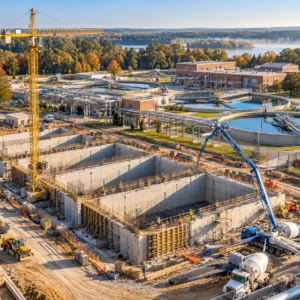
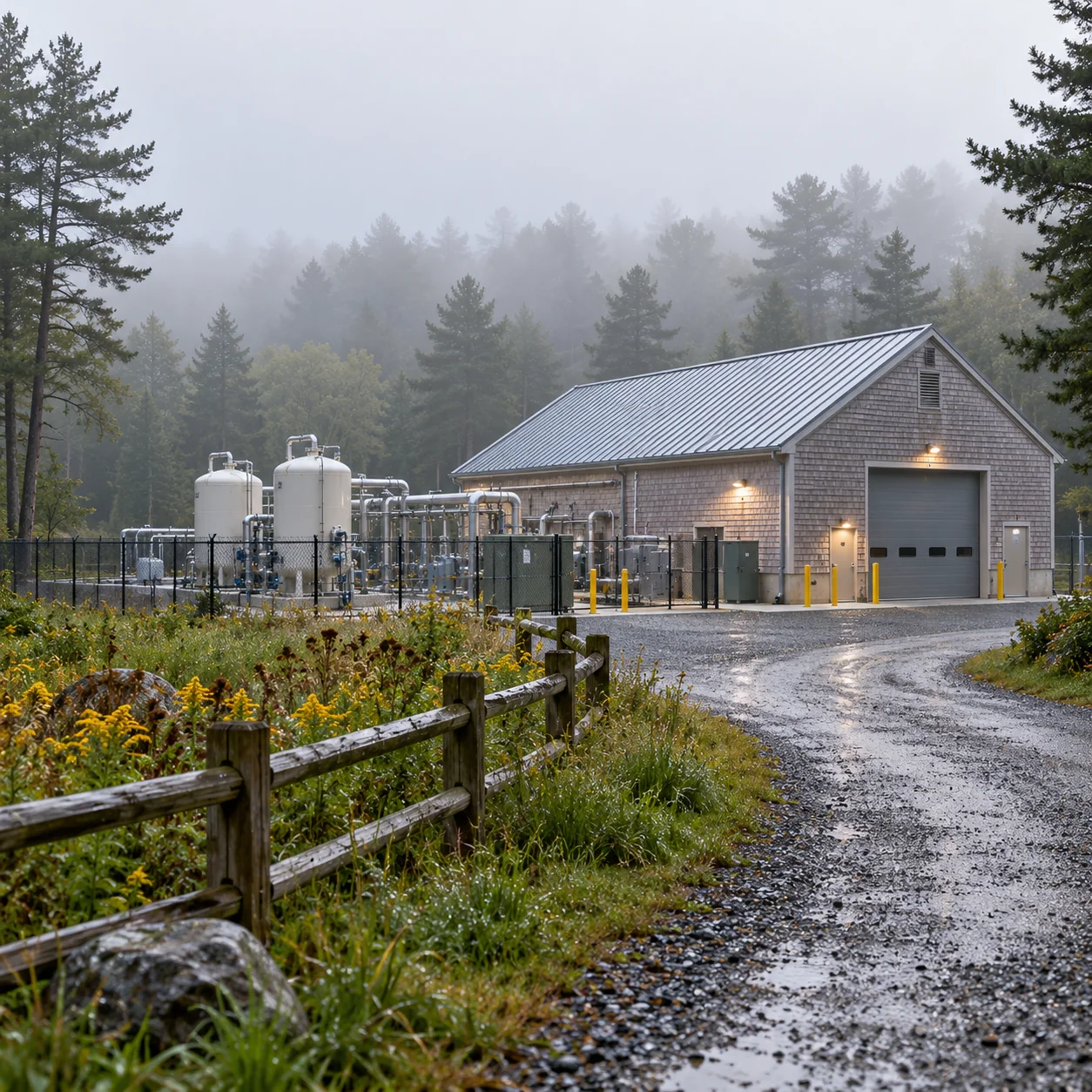
On September 10, the Brunswick & Topsham Water District held an open house for its new Jordan Avenue PFAS Treatment Facility, marking full operations at a $20 million plant built to clean groundwater affected by PFAS from the former Brunswick Naval Air Station. According to WGME, the Navy has covered the project’s costs under a contract with the district, as part of its federal environmental cleanup responsibilities.
By national standards, this is a small utility project. What makes it significant is how the deal worked. The party responsible for the contamination paid for the treatment, and a local utility got a lost water source back without passing the bill to its ratepayers.
Across the country, hundreds of communities live near current and former military installations with PFAS problems. For them, Brunswick shows what a good outcome can look like.
A Wellfield That Went Quiet Is Producing Again
The district’s PFAS story shows how better testing changes a utility’s obligations. General manager Craig Douglas told WGME that when the district tested for PFAS back in 2016 it found none, but as detection limits improved it did find some in 2021, and as regulatory limits dropped it became apparent that treatment was needed at the site.
In 2022, The Maine Monitor reported that the Jordan Avenue wellfields supplied roughly a quarter of the district’s water. The lower wellfield averaged about 40 parts per trillion of PFAS, double Maine’s interim standard of 20 parts per trillion for six combined compounds. It was taken offline, and the district put in a temporary organoclay system. Between February and mid August 2022, the district spent more than $386,000 on testing, treatment equipment, monitoring wells and staff time, the Monitor reported.
Navy testing released in September 2022 pointed to a storm drain line near the former base runway as a possible primary source.
With the new plant running, the district’s other two treatment plants no longer have to cover the gap. “It feels wonderful to see this open because it’s been putting a lot of stress on our other treatment plants,” Douglas said. The district serves roughly 7,500 customers.
Inside a Treatment Train Built for Redundancy
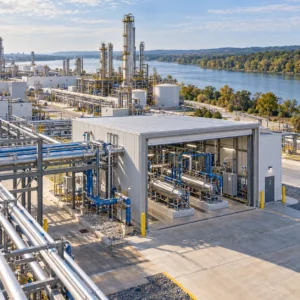
The process design reflects what PFAS treatment in groundwater now looks like in practice. According to the district’s description reported by WGME, water passes through these stages:
- Filters of graded sand coated with manganese dioxide, which remove iron and manganese with the help of sodium hypochlorite
- Two granular activated carbon contactor trains for primary PFAS removal
- An anion exchange train that captures additional PFAS molecules
- Aeration that strips carbon dioxide and brings the water to a neutral pH of 7
- Clearwell tanks for disinfection contact time, then finished water pumps to distribution
The order of these stages is deliberate.
If iron and manganese reach carbon and resin beds, they foul the media and shorten its life. Removing them first protects the more expensive PFAS media. Running carbon ahead of anion exchange gives the plant two different ways to capture PFAS, which matters because carbon and resin perform differently across long and short chain compounds. The carbon handles the bulk load, and the resin polishes what gets through.
For a utility whose source was offline for years, having that backup is worth the extra cost. A single barrier leaves no margin if regulatory limits tighten again or if more compounds come within reach of laboratory methods.
Polluter Pays Works Best When the Money Arrives as Infrastructure
Brunswick has more reason than most towns to want a clear win. According to the Maine Department of Environmental Protection, on August 19, 2024, about 1,450 gallons of firefighting foam concentrate mixed with 50,000 gallons of water was released at Hangar 4 on the former base, flowing through an oil and water separator into nearby stormwater ponds. A Unified Command of state, federal and local agencies took charge of the response.
That spill was separate from the long-term contamination of the Jordan Avenue aquifer. Still, it raised public expectations of the Navy.
The Jordan Avenue plant shows those expectations can be met in concrete and steel. Douglas said the district feels very fortunate that the Navy has stepped up and taken the responsibility. A contract between a federal responsible party and a utility, with the utility building and operating the plant, keeps operational control local and puts the cost on the party that caused the problem.
Many utilities near defense sites are still at the stage of testing, negotiating and running interim systems. Brunswick gives them a reference project to point to.
What Utilities and Their Advisers Should Take From Brunswick
The first lesson is that a non-detect result is not permanent. Brunswick went from no detections in 2016 to an offline wellfield within a few years, because lab methods improved and standards fell. Utilities planning capital programs should treat their PFAS sampling history as provisional.
The second lesson is to get a responsible party to fund treatment early. Interim systems such as Brunswick’s organoclay unit can protect customers, but they cost money every month the permanent fix is delayed.
The third lesson concerns lifecycle costs. A plant that pairs carbon with resin will produce spent media every year it runs. Contracts for regeneration, disposal and eventually destruction belong in the business case from the start.
Federal Standards Keep the Project Pipeline Full
National policy still supports projects like this one. In May 2025, the U.S. Environmental Protection Agency said it would keep the national drinking water limits for PFOA and PFOS set in April 2024, and announced plans to move the compliance date from 2029 to 2031. The agency also launched PFAS OUT, an outreach program offering technical help to water systems, with a focus on rural and small communities.
How does a 7,500 customer utility finance a plant of this size on its own?
In most cases, it cannot.
That is why responsible party funding, state revolving funds and settlement money will decide how quickly small systems comply. For engineering firms, media suppliers and equipment makers, the opportunity is less in a few large plants and more in hundreds of mid-sized plants, each requiring pretreatment, layered PFAS removal and long-term media service.
The Brunswick plant offers a template for that market: identify the source, document the impact, agree on who pays, and build a treatment train with margin.
Brunswick’s water problem began on a runway. The fix came in the form of a treatment plant.