The most expensive part of a PFAS plant is often the part nobody budgets for.
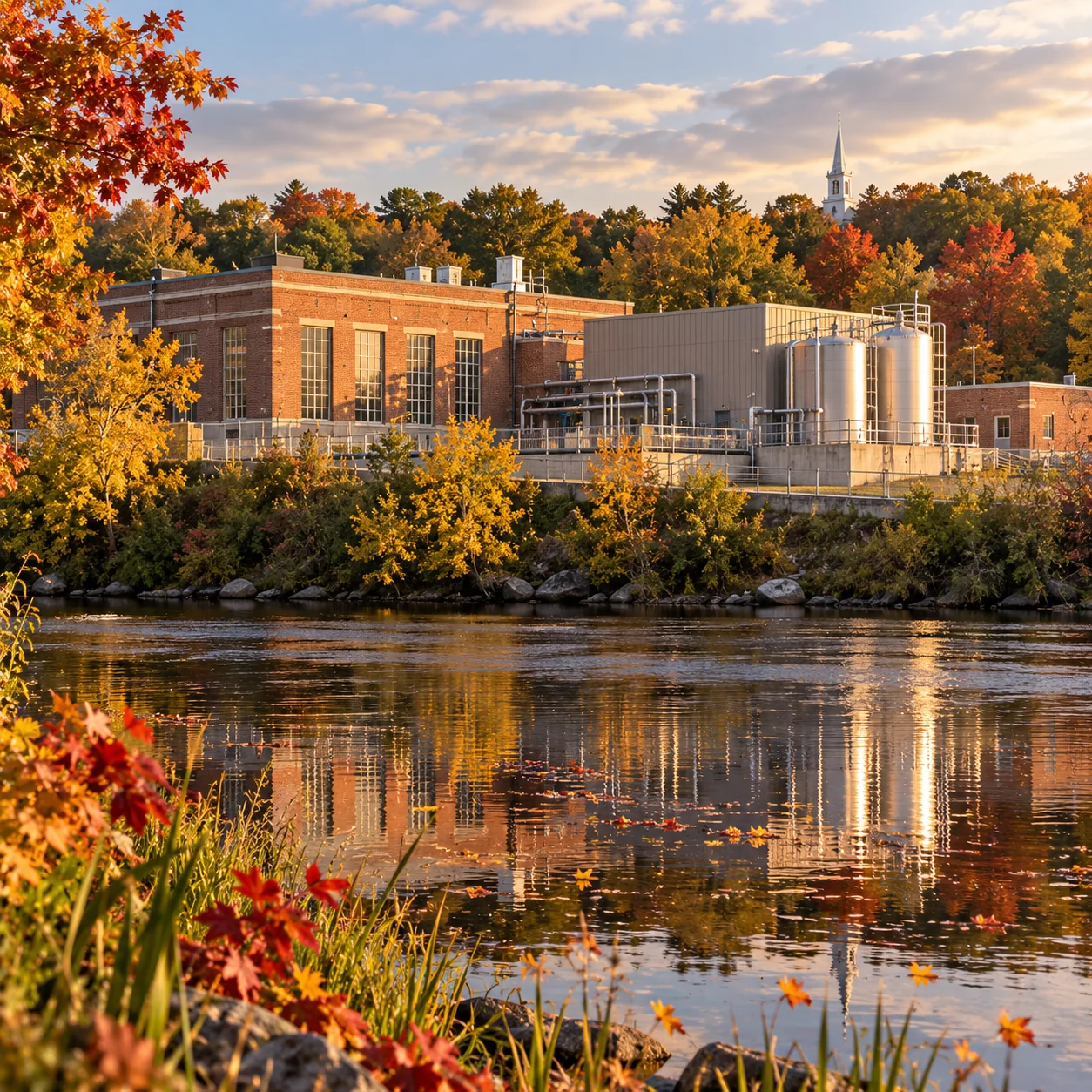
On September 23, IXOM Watercare announced that the City of Attleboro Water Department in Massachusetts had selected it to supply a 2 million gallon per day MIEX magnetic ion exchange system for the Wading River Water Treatment Plant. The system will not target PFAS directly. Its job is to remove dissolved organic carbon before the water reaches a dedicated PFAS removal stage.
That sounds like a footnote. It is closer to the main point.
According to IXOM, dissolved organic carbon interferes with many PFAS adsorption and absorption processes because those compounds compete with PFAS for the same removal mechanisms. When organics load up the media first, PFAS breaks through sooner, changeouts come more often and operating costs drift away from the numbers that justified the project. Attleboro is designing around that problem from the start.
A Plant the City Cannot Afford to Lose
Wading River matters because Attleboro has little slack in its supply. Reporting by The Sun Chronicle in 2022 put the city’s West Street plant at 4 million gallons per day, against a minimum demand of 6.5 million gallons that rises to as much as 8 million in summer. City documents say Wading River normally produces between just under 1 million and 2 million gallons per day. It was taken offline because of the state’s PFAS standard, leaving the city short of water.
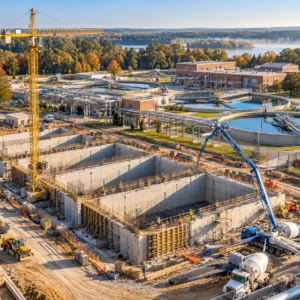
The city has since bridged the gap. A temporary PFAS treatment facility has operated since December 2025, according to H2O Global News. The permanent plant, designed by engineering firm Tata & Howard, is under construction, and the MIEX system is expected to be operational by summer 2028.
Massachusetts has enforced a limit of 20 nanograms per liter for six PFAS compounds combined, known as PFAS6, since 2020. For a supply this important, the permanent plant has to meet that limit every season.
Three Stages, Each With One Job
The treatment train splits the work into three stages. MIEX pretreatment removes dissolved organic carbon first. GreensandPlus pressure filtration then deals with iron and manganese. A final organo-clay media stage handles PFAS removal.
MIEX is a fluidized bed ion exchange process with automated resin regeneration, which IXOM says delivers continuous organic carbon removal with minimal operator input. Pulling organics out early also limits the formation of disinfection byproducts, a separate compliance burden for many systems that is easy to overlook while PFAS is getting all the attention.
The design keeps the PFAS media for PFAS. Iron, manganese and natural organic matter are taken out upstream, so the most expensive and most regulated stage is left to do the one job it was bought for.
Seasonal Water Quality Drove the Decision
The engineering case rests on variability. “The source water treated at the Wading River Water Treatment Plant contains fluctuating levels of DOC seasonally and presents a water quality challenge,” Ryan Neyland, vice president at Tata & Howard, told Water & Wastewater Asia. In the IXOM announcement, he added that, “Based on pilot study results, IXOM Watercare’s MIEX system has proven effective.”
Seasonal swings are where PFAS designs get caught out. A vessel sized for average water quality can lose capacity quickly when organic loading peaks after storms or during seasonal turnover. Media that was expected to last a year may need replacing much sooner. Each early changeout costs money and produces more spent media that still contains PFAS and has to be managed.
Pilot testing on the actual source water, across seasons, is what turns those risks into design numbers.
Media Life Is Where PFAS Budgets Are Won or Lost
“Many utilities are overlooking the impact that DOC can have on reducing PFAS treatment efficiency,” Russ Swerdfeger, IXOM’s head of marketing and strategy, told H2O Global News. For surface water systems in particular, that is a practical warning. Capital grants can pay for vessels. They rarely cover a decade of replacement media and disposal.
For utilities planning PFAS treatment, the Attleboro design points to a set of questions worth settling before procurement:
- How far organic carbon swings across seasons, not just the annual average
- Whether PFAS media has been piloted on the real source water through those swings
- Expected media changeout frequency and disposal cost over 20 years
- Iron and manganese levels that could foul downstream media
- Disinfection byproduct precursors that the same pretreatment could address
- Operator time needed for regeneration and changeouts
None of these show up in a headline removal percentage. All of them show up in the operating budget.
The Market Is Moving Past Single Technology Answers
For suppliers and investors, Attleboro shows that PFAS spending goes well beyond the PFAS removal stage. Pretreatment, filtration and residuals management are becoming part of the same purchasing decision. Vendors who can show how their equipment extends the life of downstream PFAS media, with pilot data to back it up, have a stronger case than a removal rate on a spec sheet.
There is a waste angle too. Spent PFAS media is a liability that has to be moved, regenerated, destroyed or disposed of. Less frequent changeouts mean a smaller PFAS residuals stream, which is the quiet benefit of treating the competing chemistry first.
The regulatory clock supports early action. IXOM’s announcement notes federal PFAS reporting requirements beginning in 2027 and federal enforcement beginning in 2031, on top of the existing Massachusetts limit. “The City of Attleboro is taking early action to ensure their PFAS treatment strategies will be effective,” Swerdfeger said in the release.
That is the right way to describe it. Thousands of systems have yet to choose a treatment train, and the utilities that test their water chemistry first will spend less over the life of the plant.
PFAS removal gets the headlines. Pretreatment decides how long the investment keeps paying off.