Wisconsin has finally started spending its PFAS money.
On October 20, 2026, Governor Tony Evers and the Wisconsin Department of Natural Resources launched the first two grant programs drawn from the state’s $125 million PFAS Trust Fund. One pays municipalities to design and run their own PFAS sampling programs. The other mails free test kits to private well owners. Together they mark the moment a fund approved in the 2023 to 25 biennial budget moves from political argument to field work.
The money sat unspent for years. According to WEAU, Evers repeatedly called for its release before he signed 2025 Wisconsin Acts 200 and 201 earlier in 2026, the two bipartisan laws that unlocked it.
For an industry that depends on knowing where contamination is before it can treat it, that delay mattered. So does the way the state has now chosen to spend the first tranche.
Sampling Comes First Because Treatment Depends on It
The larger of the two programs is the PFAS Community Grants Sampling Program, funded from what the governor’s office describes as a $79 million investment in community based programs under Acts 200 and 201. It pays for sampling of private wells, public water supplies at eligible schools and child care facilities, and wastewater and other eligible materials at treatment plants.
The eligible applicant list is broad. Counties, cities, villages, towns, Tribal governing bodies, utility and sewerage districts, lake protection districts and technical college districts can all apply. Each municipality designs and implements its own sampling plan to reflect local needs and priorities.
That design choice is the interesting part.
Rather than a single statewide campaign run from Madison, the DNR is handing the planning to the people who know where the old landfills, fire training grounds and industrial outfalls sit. The DNR says it shaped the program after a series of listening sessions, meetings with partner groups and an online survey. “We wanted these programs to efficiently support municipalities pursuing funding,” DNR Secretary Karen Hyun said.
Cycle A applications will be accepted for about six months, and communities that need more time to build a plan can apply in later cycles.
Private Wells Get a Direct Route to Answers
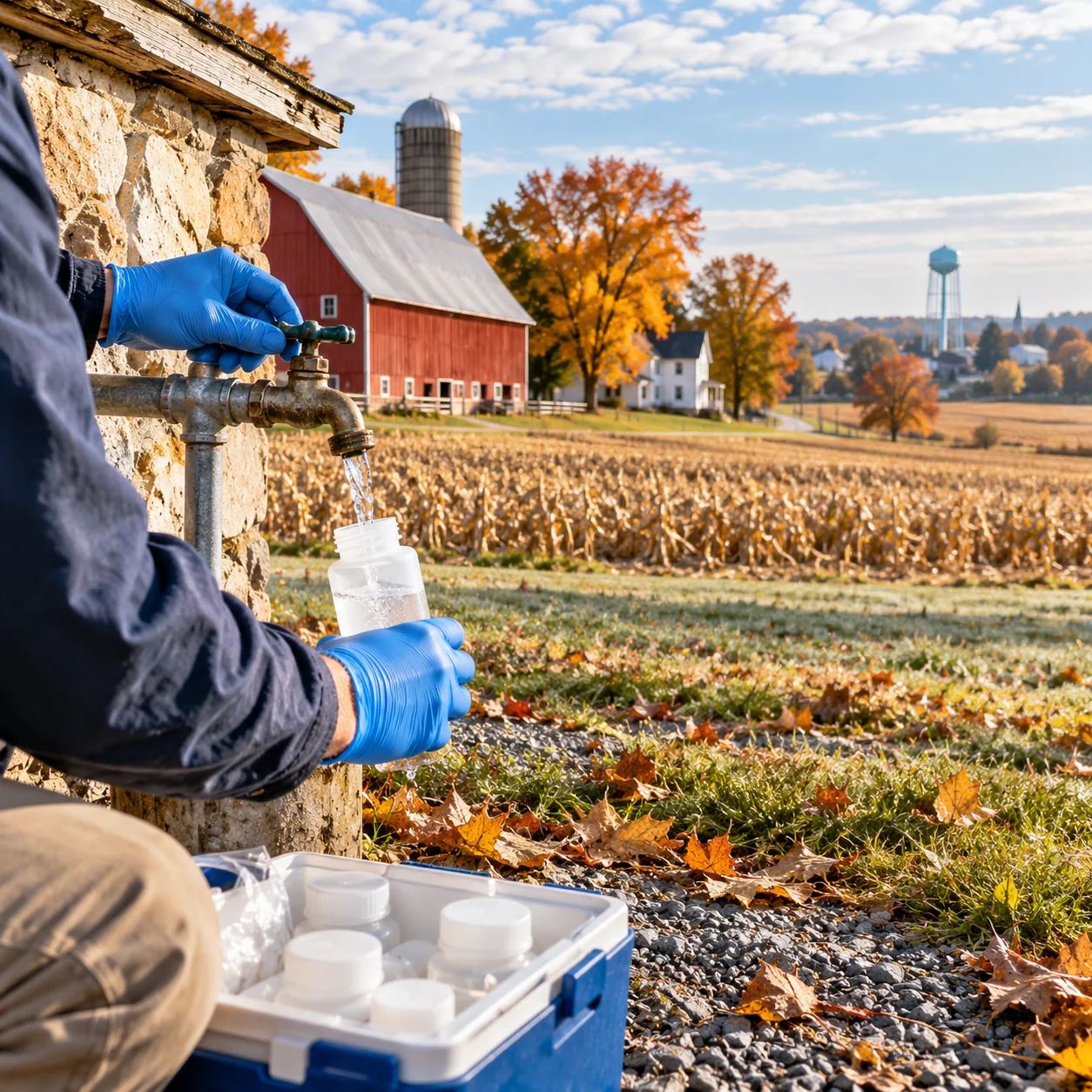
The second program, the Wisconsin PFAS Private Well Testing Program, is funded from a $10 million allocation in the same bills. It serves well owners and users who do not live inside a municipality pursuing a community grant.
The mechanics are simple. Once eligibility is confirmed, the Wisconsin State Laboratory of Hygiene mails a home sample kit with instructions and a prepaid return label. The owner collects the sample and sends it back.
Funding is limited, and the state is encouraging residents to check first with local officials about community sampling plans. That sequencing keeps the two programs from competing for the same households.
For private well owners, the testing is only the first step. Acts 200 and 201 also added $35 million to the state’s Well Compensation Grant Program and expanded its eligibility thresholds. Owners who find PFAS through either new program can apply for help installing treatment, drilling a new well or connecting to a public water supply.
A Pipeline of Data Becomes a Pipeline of Projects
Read together, the programs form a chain. Sampling identifies contamination. Existing DNR funding then helps communities that find PFAS in public water systems install treatment or build new wells. The well compensation money does the same for private owners.
That chain is what treatment providers, engineering firms and laboratories should watch.
Each municipal sampling plan is effectively a scoping exercise for future work. Wells and water supplies that test above the state standard become candidates for carbon, resin or replacement source projects. Wastewater sampling at treatment plants builds the baseline that utilities will need before they can make decisions about pretreatment and biosolids.
The standard itself sharpens that demand. According to the governor’s office, Evers approved changes in March that set a new enforceable drinking water standard of 4.0 parts per trillion, down from the previous 70 ppt threshold. A tighter limit means more of what the sampling finds will require action.
What Firms Serving Wisconsin Should Prepare For
The near term opportunity is less about large capital contracts and more about the work that precedes them. Firms positioning for Wisconsin should consider:
- Laboratory capacity for a surge in drinking water, well and wastewater samples
- Sampling plan design support for smaller municipalities and Tribal governments
- Rapid treatment options for schools and child care facilities that test high
- Point of entry systems for private wells funded through well compensation grants
- Feasibility studies that turn sampling results into fundable treatment projects
- Wastewater baseline work that prepares utilities for future biosolids decisions
Municipalities with limited staff will look for partners who can help them write a plan, collect samples and interpret results within the six month Cycle A window. Firms that can do all three will be well placed.
More Money Is Already Queued
The two programs are the first, not the last. The governor’s office says grants for sampling irrigation wells, agriculture and landfill leachate for PFAS, along with dedicated funding for PFAS work at public airports, are expected to be available in 2027. The Natural Resources Board was also slated to vote on a proposed rule establishing groundwater standards for PFAS shortly after the launch.
Separately, about $10 million from the State of Wisconsin v. Tyco Fire Products LP settlement has been released for water needs in and around Marinette, where the state says the case marked one of the first efforts to hold polluters accountable for PFAS contamination.
The result is a state that now has a funded standard, a funded testing program and a funded route to treatment, all moving at once. “This is an exciting day that has been a long time coming, and these programs will have lasting impact on communities and private well owners across the state,” Evers said.
Wisconsin spent years arguing over its PFAS fund.
Now the sampling results will decide where the treatment work goes next.