In June 2024, Salem’s water system did not meet applicable PFAS drinking water rules. By October 2026, it had a finished treatment plant.
On 27 October 2026, New Jersey American Water and the City of Salem marked the completion of a $21.3 million PFAS treatment installation at the Salem Water Treatment Plant. The system can treat up to 2 million gallons of water per day for the City of Salem and parts of Quinton, Elsinboro and Mannington townships.
The project is small by national standards. Its significance lies in how quickly it moved and in the ownership model that made it possible.
From Acquisition to Treatment in Under Eighteen Months
New Jersey American Water acquired Salem’s water and wastewater systems in June 2024. According to the company, the water system was not meeting applicable drinking water regulations for PFAS at the time.
The timeline that followed was fast for municipal water infrastructure:
- June 2024: acquisition of the Salem water and wastewater systems
- Spring 2025: groundbreaking on the treatment project
- November 2025: new PFAS treatment placed into service
- Summer 2026: final housing facility for the treatment completed
- October 2026: formal completion of the $21.3 million project
That means residents were receiving treated water about seventeen months after the sale closed, well before the full building program was finished.
Mark McDonough, president of New Jersey American Water, said the team moved quickly to bring the system online on an accelerated timeline. “Today is about delivering on the commitment we made to Salem,” he said.
Granular Activated Carbon Did the Heavy Lifting
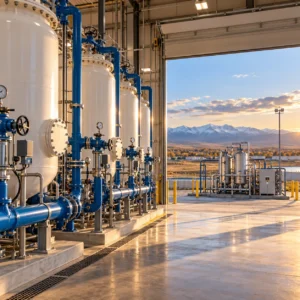
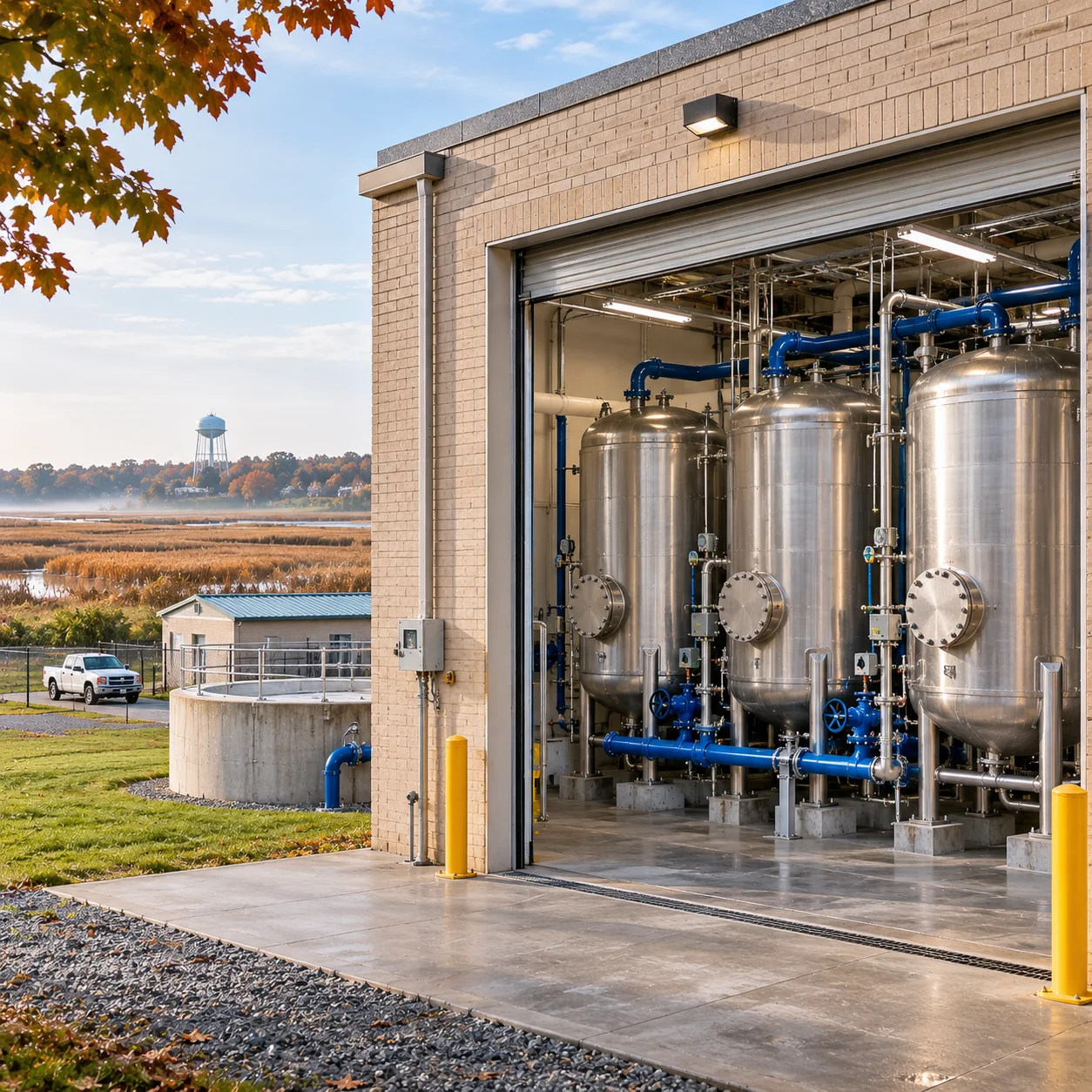
The core of the upgrade is granular activated carbon treatment, built as six vessels arranged in three treatment trains. Splitting the vessels into parallel trains allows operators to change out carbon or service equipment on one train while the others keep running.
Granular activated carbon is one of the most widely used approaches to PFAS removal at small and mid-sized plants. It is familiar to regulators and operators, and it fits inside conventional treatment buildings.
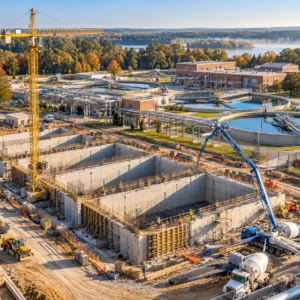
The Salem project went well beyond the carbon vessels. According to ROI-NJ, the work also included a new treatment building and backwash equalization tank, upgrades to source-water wells, treatment controls and monitoring, and replacement of pumps, piping, membrane treatment units and chemical-feed equipment, along with fire protection, security and site improvements.
That scope matters.
PFAS treatment rarely arrives on its own. In older systems, it usually exposes every other part of the plant that has been deferred, and the full bill reflects that.
Why Small Systems Struggle and How Consolidation Helps
Many small water systems face the same problem Salem faced: a PFAS compliance requirement that arrives on top of ageing infrastructure, with a narrow rate base to pay for both.
Regulated utilities with larger customer bases can spread those costs and bring engineering, procurement and operating experience to the job. New Jersey American Water serves about 3 million people across the state, according to the company, and says it has worked with the New Jersey Department of Environmental Protection on PFAS since 2007, treating certain PFAS compounds as early as 2012.
In Salem, the company has invested more than $28 million in water and wastewater infrastructure in its first two years of ownership and plans to invest an additional $48 million over the next five years.
Salem City Mayor Jody Veler said the sale came with an expectation of responsible stewardship and continued investment. “Our residents deserve confidence in the water they use each day, and investments like this help us build that confidence,” she said.
Is consolidation the only route to PFAS compliance for small towns?
No. But Salem shows how much faster it can move when capital and technical capacity arrive together.
What Other Utilities and Suppliers Can Take From Salem
For utilities, engineers and treatment suppliers, the Salem project offers several practical lessons.
First, phasing works. Placing treatment into service in November 2025, before the final housing facility was finished in summer 2026, delivered compliant water to customers months earlier than a single end-to-end build would have.
Second, PFAS budgets should be planned as whole-plant budgets. The $21.3 million figure covers far more than carbon vessels, and comparable projects at other ageing plants are likely to look similar.
Third, acquisitions of struggling systems can be a delivery channel for PFAS treatment. A buyer with a larger balance sheet can take on upgrades that a small system would struggle to finance alone.
Assemblyman David Bailey described the plant as a strong model and a good use of technology, saying “PFAS are fundamental issues for the people we serve.”
Compliance Is a Milestone, Not the Finish Line
New Jersey American Water was clear that the work in Salem continues. “Completing this project is an important milestone, but it is not the end of our work in Salem,” McDonough said, pointing to further investment in infrastructure, people and partnerships.
For the PFAS treatment market, that is the real story. Many small systems will need similar upgrades, and each one will be judged on speed, cost and reliability.
Salem needed new treatment. What it got was a plan, a partner and water it can trust.